
Gerry Utama is an alumnus of the Faculty of Geography, UGM, class of 2011, who currently works at the Institute of Earth Sciences, Saint Petersburg State University, and the Arctic and Antarctic Research Institute in Russia. In his presentation for a public lecture titled “Exploration in Antarctica: Making History and Building Global Research for Indonesia,” he highlighted the importance of Antarctica for Indonesia, not only in a geopolitical context, but also from scientific and technological perspectives. “Antarctica holds a great deal of information about the history of the Earth that remains remarkably intact, like a vast memory or hard drive that has not yet been fully uncovered,” he said. He further emphasized Antarctica’s role as a center for scientific research, particularly in the context of global climate change. “Antarctica is not only a unique region with an extreme climate, but it also holds important data related to Earth’s history in a remarkably preserved state, making it an invaluable research hub,” he added.

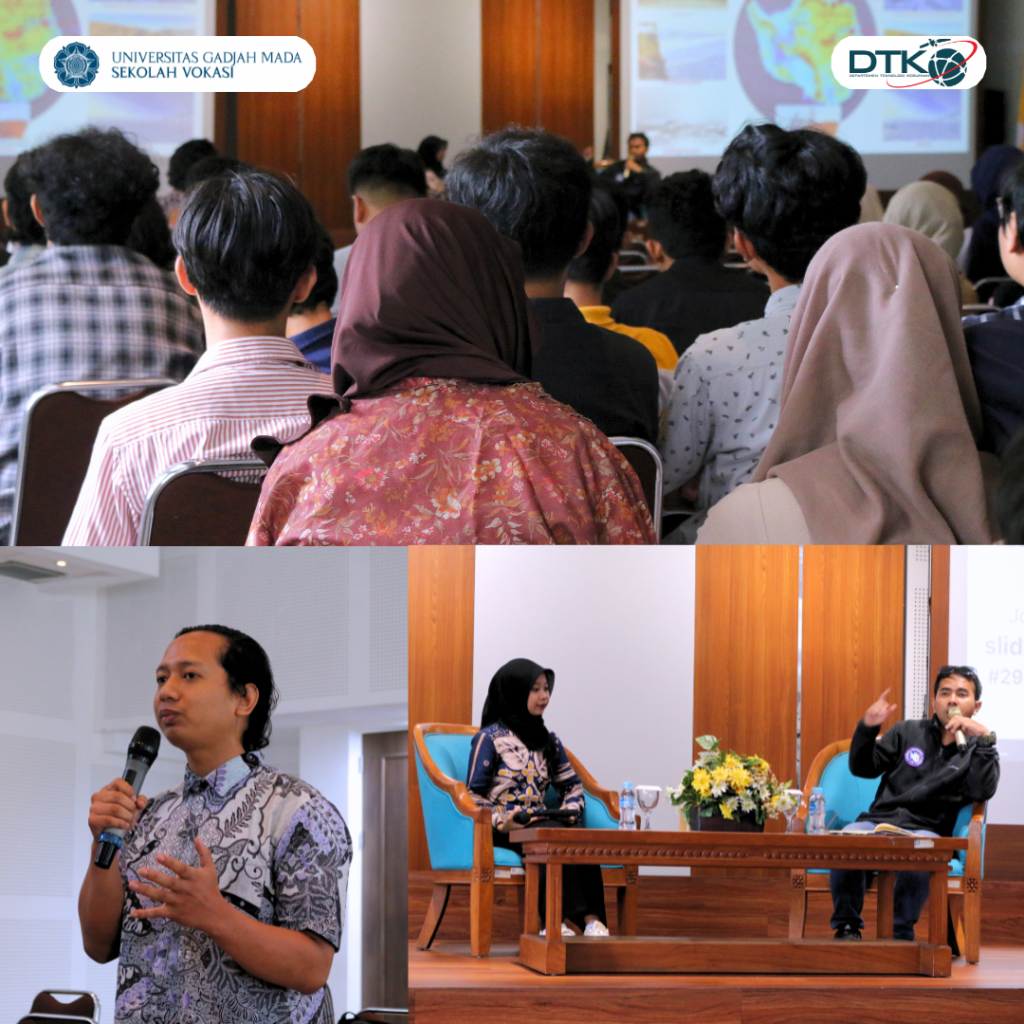
In his presentation, he outlined several compelling reasons why Indonesia must take a more active role in Antarctica. One of them is Indonesia’s relatively close geographical distance to Antarctica. Jakarta, for instance, is approximately 5,600 km from Russia’s Mirny Station in Antarctica. Additionally, the issue of climate change and the potential submersion of small Indonesian islands due to rising sea levels are important concerns directly related to Antarctic research. “Antarctica is a key location for understanding the impact of global climate change, including in our own region,” he said. He further explained that the melting of ice in East Antarctica, which holds an enormous volume of ice, could have a significant impact on global sea level rise.
One of the key research activities he conducted in Antarctica was the mapping of lichen ecosystems and geomorphology in areas such as King George Island. In addition, monitoring the melting of ice on the West Antarctic Ice Sheet is a primary concern, as even small changes in its ice volume can affect global ocean circulation and sea temperatures.
According to him, Indonesia’s involvement in Antarctic research opens up opportunities for the development of advanced technologies, such as the construction of icebreaker vessels and Antarctic research station modules. “Indonesia could become a logistics hub for ASEAN countries in supporting air and sea transportation to Antarctica,” he said. He also emphasized that Indonesia possesses the human resources capable of conducting research in Antarctica, as evidenced by the country’s participation in joint expeditions with other nations. To date, Indonesia has sent scientists on three expedition missions to Antarctica, as follows:
- The Australian Antarctic Division with the Aurora Australis Icebreaker, which included Dr. Agus Supangat, Dr. M. Lukman, Dr. Agus Guntoro, and Titi Soedjiarti, M.S.
- The Japan Antarctic Research Expedition (JARE) 58 in 2016 with the Japanese Icebreaker Shirase, which included Nugroho Imam Setiawan, Ph.D.
- The Russian Antarctic Expedition 69 in 2024 with the Russian Icebreaker Akademik Tryoshnikov, which included Gerry Utama.
At present, Indonesia has not yet ratified the Antarctic Treaty, an international agreement governing the peaceful use and environmental protection of Antarctica. “Indonesia needs to ratify this agreement promptly in order to participate more actively in scientific research and the management of Antarctica,” he explained. The treaty, first signed in 1959 and entering into force in 1961, has been ratified by 57 countries, though Indonesia is not yet among them. He also proposed the establishment of the Indonesian Antarctic Exploration Agency (Badan Eksplorasi Antarktika Indonesia, BEAI) as an important step toward strengthening Indonesia’s role in Antarctic research. “The establishment of this institution will support the coordination of research, exploration, and technological development, as well as provide a tangible Indonesian contribution to global research,” he concluded.
In his closing remarks, he also underscored the significant potential for technological development in Antarctica. “Indonesia has a highly capable pool of human resources for conducting research in Antarctica, as demonstrated by the three joint expeditions that have already taken place. Looking ahead, Indonesia has the potential to build its own research station and develop icebreaker vessels that can be tested in Antarctica’s extreme environment.” He further noted that Indonesia could serve as a logistics and transportation hub for ASEAN nations engaged in Antarctic research activities. “Indonesia has a great opportunity to become the ASEAN hub for logistics transportation to Antarctica, both by air and sea. Moreover, research in Antarctica opens up opportunities for the development of advanced technologies applicable across various sectors,” he explained. As part of its preparations for deeper involvement in Antarctica, Indonesia has developed a roadmap for the establishment of the Indonesian Antarctic Exploration Agency (BEAI). This plan encompasses several strategic steps, including:
- 2025 to 2026: Establishment of BEAI, design of institutional model inventories, and mapping of Antarctic research needs.
- 2026 to 2027: Cooperation among Antarctic research institutions through joint research and joint expeditions.
- 2027 to 2028: Design of placement modules for Indonesia’s own Antarctic research station, international cooperation on Antarctic issues and research collaboration, and the launch of the 2nd Indonesia Antarctic Expedition (IAE).
- 2028 to 2029: Development of Antarctic research station modules and the launch of the 3rd Indonesia Antarctic Expedition (IAE).
In addition, the establishment of the first Antarctic research station in ASEAN and the development of research modules are important steps in strengthening Indonesia’s involvement. The experience gained from previous expeditions provides a strong foundation for building research independence in the field of Antarctic science. Indonesia’s active participation in Antarctic research demonstrates the country’s commitment to continued support for international collaboration and contribution to global climate change research. “We have proven that Indonesia has sufficiently strong resources to contribute to global scientific research. It is now time for us to take further steps by building research independence in Antarctica and strengthening our position in the global scientific arena,” he concluded.
With the experience gained from previous expeditions, Indonesia is ready to take on a greater role in preserving the Earth through Antarctic research, while simultaneously developing supporting technologies and scientific capacities.
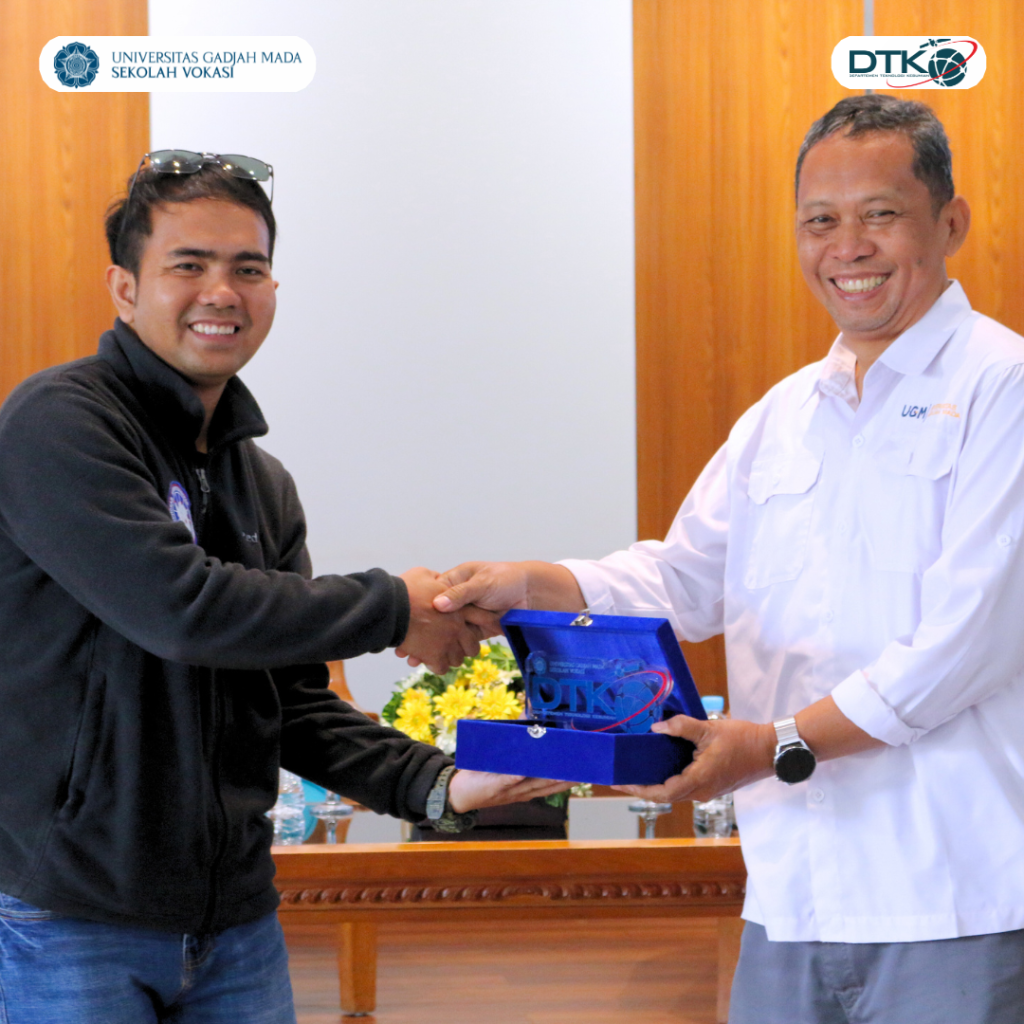
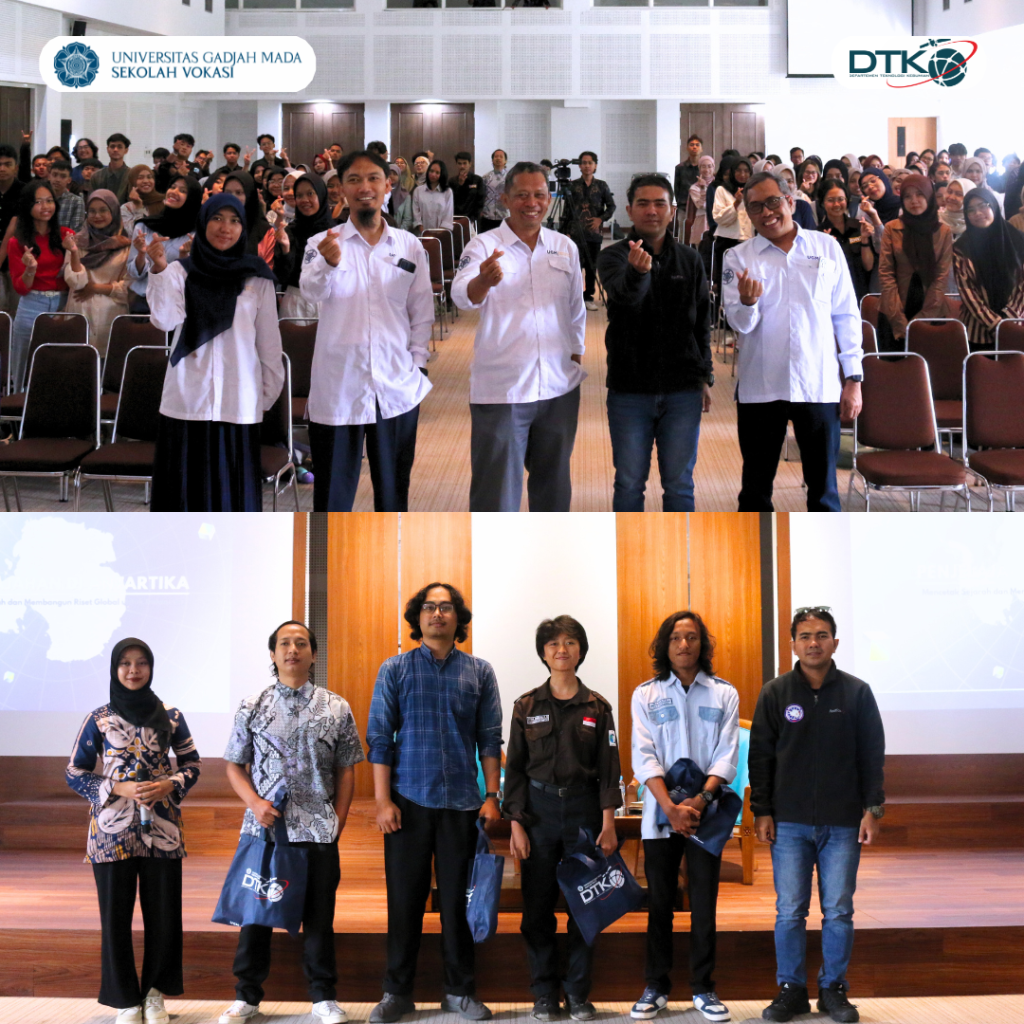
Through this public lecture, Gerry Utama emphasized that Indonesia’s involvement in Antarctica is not merely a matter of prestige, but also one of strategic scientific and geopolitical importance. The ratification of the Antarctic Treaty and the establishment of a dedicated body to oversee Antarctic research will be crucial steps for Indonesia to play an active role in global conservation and research in Antarctica. With the potential to become an ASEAN logistics transportation hub to Antarctica, as well as capabilities in advanced technology development, Indonesia can make history in Antarctic research and make a meaningful contribution to global efforts in addressing climate change.